1.2 KiB
From a LinkedIn post by Mads Bundgaard Nielsen
-
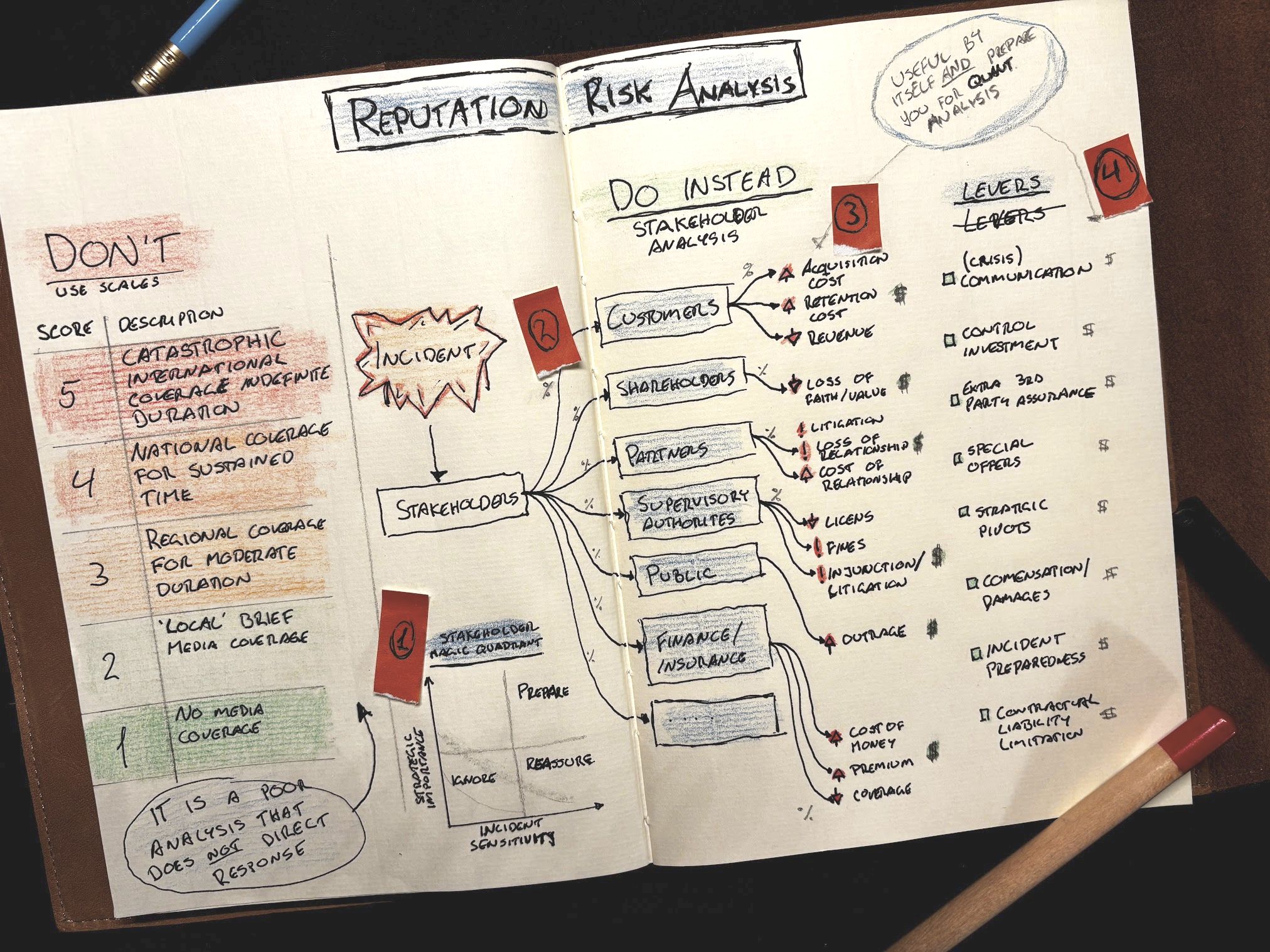
Perform a Stakeholder analysis, mapping them on two dimensions: a) Strategic importance: Stakeholder can influence path to strategic objectives
b) Incident sensitivity: Negative reaction is influenced by your incidents.- Note the important and sensitive stakeholders.
-
Identify events that can impact your reputation with important stakeholders: breach, service disruption, delays, budget exceedance, ransomware, fraud, etc. - Bear in mind: Not all event types evoke the same reaction from the same stakeholder.
-
List the possible impact from negative reactions (see notes for examples); Ask yourself “what would I see, if my reputation with
stakeholderwas diminished?”. 1-3 tangible metrics will probably immediately pop up, and if not, its probably not an important stakeholder after all. -
Identify levers: What actions (preemptive or reactive) are you able to take or plan? Probably only a handful. The good news is that your levers almost certainly mitigate >90% of the negative reputation outcomes.