
6.3 KiB
How does Kerberoasting work
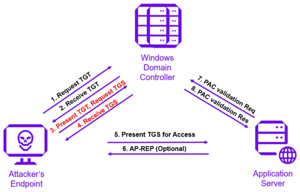

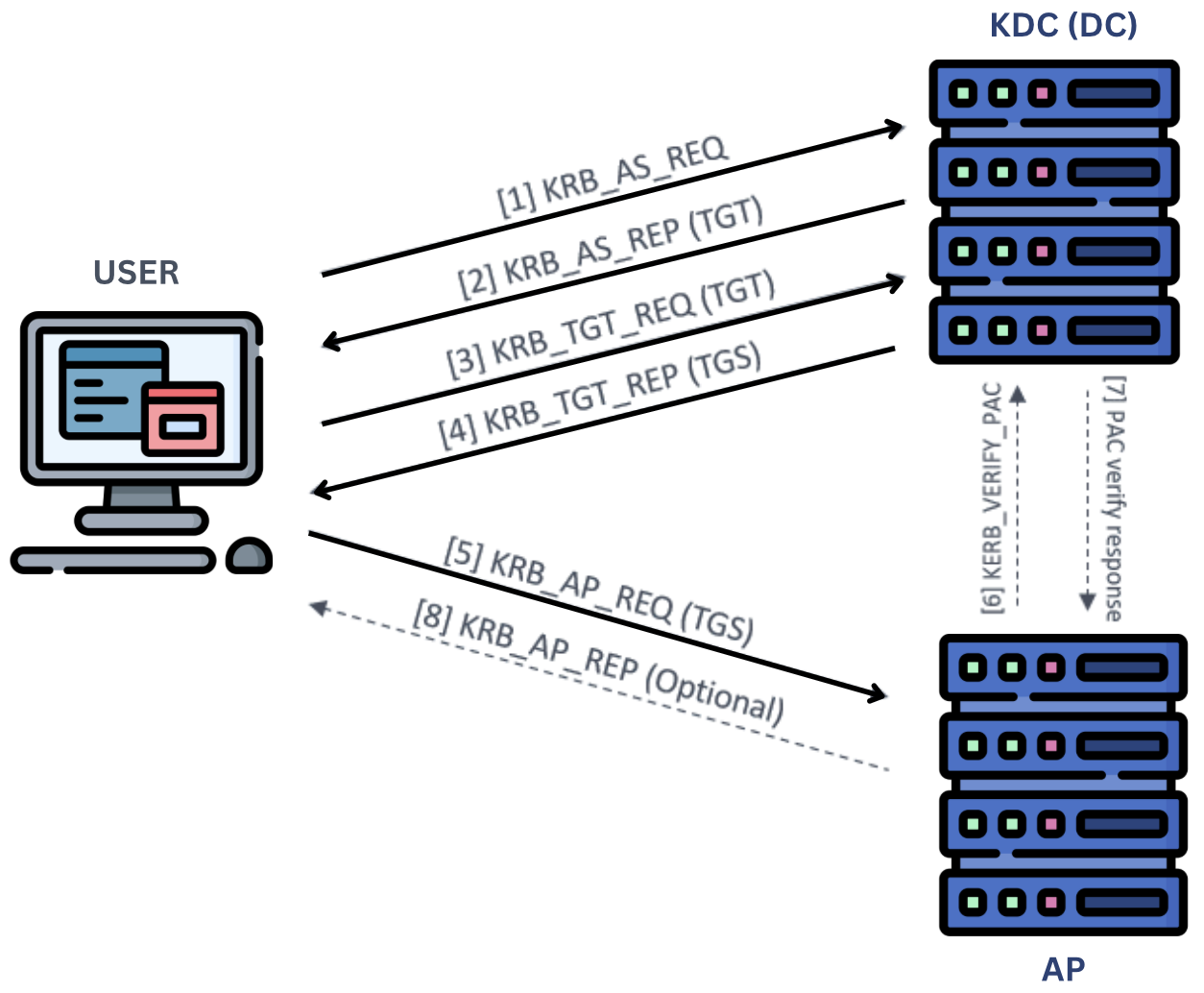
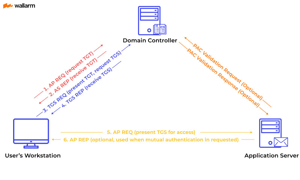
Kerberoasting is a cyberattack that exploits weaknesses in the Kerberos authentication protocol to steal service account credentials in Active Directory environments. Here's how it works:
Attack Process
-
Initial Access
Attackers first gain authenticated access to the network using compromised domain user credentials. No elevated privileges are required at this stage37. -
Service Ticket Harvesting
The attacker queries Active Directory for accounts with Service Principal Names (SPNs), which identify network services. Using tools like PowerShell or BloodHound, they request Kerberos service tickets (TGS tickets) for these accounts18. These tickets are encrypted with the service account's password hash5. -
Ticket Extraction
Tools like Mimikatz or Rubeus extract the encrypted ticket data from memory. The attack specifically targets tickets using the weaker RC4_HMAC_MD5 encryption type rather than more secure AES encryption24. -
Offline Password Cracking
Attackers use brute-force tools like Hashcat or John the Ripper to crack the hashes offline. Success depends on password strength:
| Attack Stage | Key Tools Used | Vulnerability Exploited |
|---|---|---|
| Ticket Harvesting | PowerShell, BloodHound | SPN misconfigurations |
| Ticket Extraction | Mimikatz, Rubeus | RC4_HMAC_MD5 encryption |
| Password Cracking | Hashcat, John the Ripper | Weak service account passwords |
Why It's Effective
- Stealth: No network traffic generated during cracking4
- Legitimate Appearance: Uses normal Kerberos functions6
- High Reward: Service accounts often have elevated privileges3
Mitigation Strategies
- Enforce strong passwords (25+ chars) for service accounts24
- Use AES encryption instead of RC4 for Kerberos tickets27
- Implement Managed Service Accounts with auto-rotated passwords5
- Monitor for abnormal TGS ticket requests48
- Enable Multi-Factor Authentication for sensitive accounts4
The attack chain demonstrates how attackers leverage legitimate protocol features to escalate privileges, making detection challenging without proper monitoring and encryption standards15. Regular password rotation and eliminating weak encryption types remain critical defenses24.
Citations:
- https://www.sentinelone.com/cybersecurity-101/threat-intelligence/what-is-kerberoasting-attack/
- https://blog.quest.com/understanding-kerberoasting-attacks-and-how-to-prevent-them/
- https://www.vaadata.com/blog/what-is-kerberoasting-attack-and-security-tips-explained/
- https://www.strongdm.com/what-is/kerberoasting
- https://www.picussecurity.com/resource/blog/kerberoasting-attack-explained-mitre-attack-t1558.003
- https://www.crowdstrike.com/en-us/cybersecurity-101/cyberattacks/kerberoasting/
- https://www.ibm.com/think/topics/kerberoasting
- https://www.rapid7.com/fundamentals/kerberoasting-attack/
Answer from Perplexity: pplx.ai/share